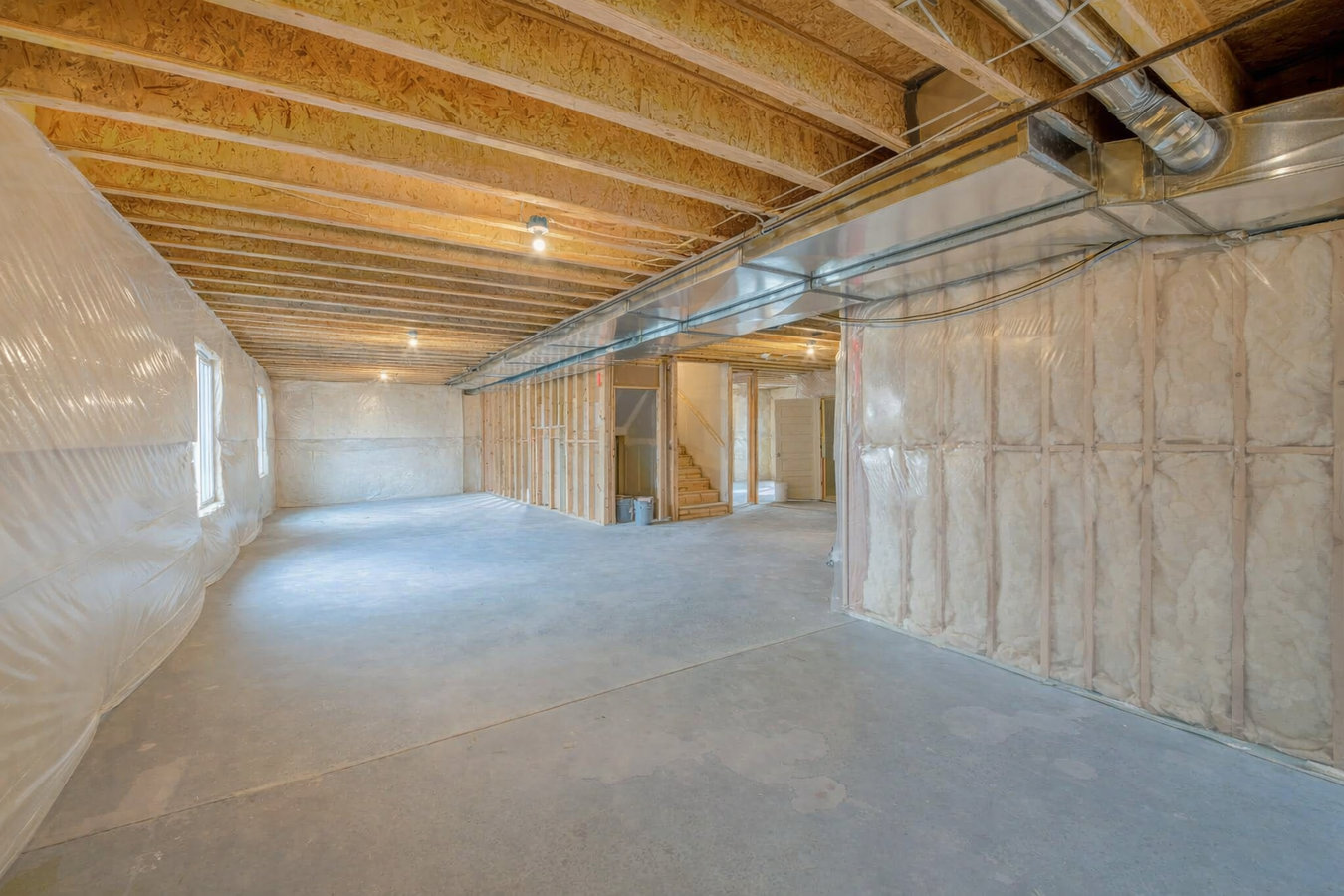
Below-grade spaces in San Luis face desert heat and monsoon moisture at the same time. We insulate and seal them properly so your home stays comfortable and your cooling costs stay manageable.
Basement insulation in San Luis creates a barrier between your living space and the unconditioned air below or around it, stopping heat from moving freely through your floors and walls - most residential jobs are completed in one to two days with no need to leave your home during the work.
In a desert climate like San Luis, the priority for basement insulation is a little different from most of the country. Here it is less about keeping warmth in and more about stopping extreme heat from working its way up through an unprotected below-grade space. When that heat transfer goes unchecked, your air conditioner has to fight it all day - and you feel the result on your electric bill every month from May through October. If your below-grade space also has moisture exposure during monsoon season, the material you choose matters just as much as the location.
Basement insulation works best when combined with proper air sealing. If your space also has gaps around pipes, penetrations, or rim joists, pairing insulation with closed-cell foam insulation delivers both thermal performance and moisture resistance in a single application.
If your electricity bill climbs sharply from May through September and nothing in your habits has changed, your insulation envelope may be failing. In San Luis, where temperatures push past 110 degrees for weeks at a time, even a modest gap in below-grade insulation forces your AC to run almost nonstop. Bills that seem disproportionate to your home size are worth investigating.
If your below-grade space smells musty after a monsoon event, or if you notice water stains or white mineral deposits on the walls, moisture is getting in. San Luis gets hit with sudden humidity and heavy rain from July through September. Noticing these signs is your cue to get a professional assessment before any insulation goes in.
Walk barefoot across the floor directly above your basement or utility space on a hot afternoon. If that surface feels noticeably warmer than other floors in your home, heat is moving up through an unconditioned space below. This is a straightforward sign that the basement ceiling has little or no insulation doing its job.
If a previous owner converted a below-grade space into a living area without pulling permits in Yuma County, insulation was likely skipped or done incorrectly. Unpermitted work often surfaces during a home sale inspection. Getting the insulation assessed and brought to current standards now is far less expensive than addressing it under pressure during a transaction.
The right approach depends on how your below-grade space is used and where the heat transfer is happening. If your goal is to condition the space and stop perimeter heat gain, insulating the surrounding walls is the right move. If the space stays unconditioned and you want to protect the floor above, insulating the ceiling of the basement - the underside of your living area - is often more effective. We assess your specific situation before recommending anything.
For material selection, moisture behavior in your specific space drives the decision. Below-grade spaces in the Yuma County area that show any signs of monsoon-related humidity are better served by moisture-resistant options like closed-cell spray foam or rigid foam board rather than fiberglass batts, which can absorb water and lose effectiveness when wet. We also pair insulation work with crawl space insulation for homes where both types of below-grade spaces are present - addressing them together gives you the most complete result.
Applied to the concrete or block walls surrounding the space - best when the goal is to condition the basement or stop heat from entering through the perimeter.
Installed on the underside of the floor above - the right choice when the basement stays unconditioned and you want to protect the living space from temperature transfer.
Bonds directly to concrete or block, seals air gaps, and resists moisture - well suited to below-grade spaces in areas with monsoon-season humidity spikes.
A moisture-resistant alternative to batts for basement walls, with a clean finish that leaves the space ready for future use.
True below-grade basements are not common in San Luis or the broader Yuma County area. The hard caliche soil layer just below the surface, proximity to the Colorado River, and local construction traditions that favor slab-on-grade homes mean that if your home has a below-grade space, it is likely a partial basement, a utility room, or part of an older custom-built home. A contractor familiar with desert soil conditions and local moisture behavior will spec your job differently than someone applying a standard approach copied from a colder, wetter climate. The Somerton, AZ area and Yuma, AZ share these same soil and construction characteristics, and we bring the same local expertise to every job across the region.
Monsoon season adds another layer of complexity that contractors from outside this region often underestimate. From July through September, sudden humidity spikes and occasional heavy rain can push moisture into below-grade spaces that seem perfectly dry the rest of the year. Choosing the wrong insulation material - something that absorbs moisture instead of repelling it - can lead to mold and material breakdown within a few seasons. The U.S. Department of Energy recommends moisture-resistant materials for below-grade applications - guidance that matters even more in a climate with San Luis summers and monsoon season combined.
We ask a few basic questions - space size, whether you have noticed any moisture, and your main goal. No need to know everything upfront. We respond within 1 business day.
A team member walks your basement or below-grade space, checks walls and ceiling, looks for moisture signs, and takes measurements. We point out anything that needs addressing before insulation goes in.
You get a written quote covering scope, materials, and total cost. We explain the recommended approach and give you time to compare estimates - we never pressure you to sign on the spot.
Most jobs finish in one to two days. Before leaving, the crew walks you through the completed work so you can confirm everything looks right and ask any final questions.
Free estimate, no obligation. We respond within 1 business day and come to you.
(928) 296-5342Every project starts with a free written estimate that lays out the scope, materials, and price before work begins. You know what you are paying for up front, not just our word that it will be fine.
Below-grade spaces in this area behave differently than in cooler, wetter parts of the country. We work in Yuma County regularly and understand how local soil, heat, and monsoon moisture affect below-grade construction.
We check your space for moisture before recommending or installing anything. Insulating over a moisture problem creates mold - an outcome we will not leave you with by skipping that step.
You always receive a written estimate that spells out exactly what gets done, what materials are used, and what the total cost will be. No surprises on installation day.
Basement and below-grade work in San Luis requires a contractor who understands the local soil, heat load, and seasonal moisture cycle - not one applying a generic approach from a different climate. We bring Yuma County experience to every job, and we check for moisture before a single piece of insulation goes in.
Every basement job starts with a free written estimate and ends with documentation of what we installed, so you have a clear record of the work. We put the scope and price in writing before we start, and we are glad to walk you through any of it.
Closed-cell foam is one of the strongest performers for below-grade walls - it resists moisture, bonds to block or concrete, and delivers a high R-value in limited space.
Learn moreMany San Luis homes have crawl spaces rather than basements - the process and material choices are closely related.
Learn moreSummer heat season comes around fast - lock in your installation date before temperatures peak and schedules fill up.