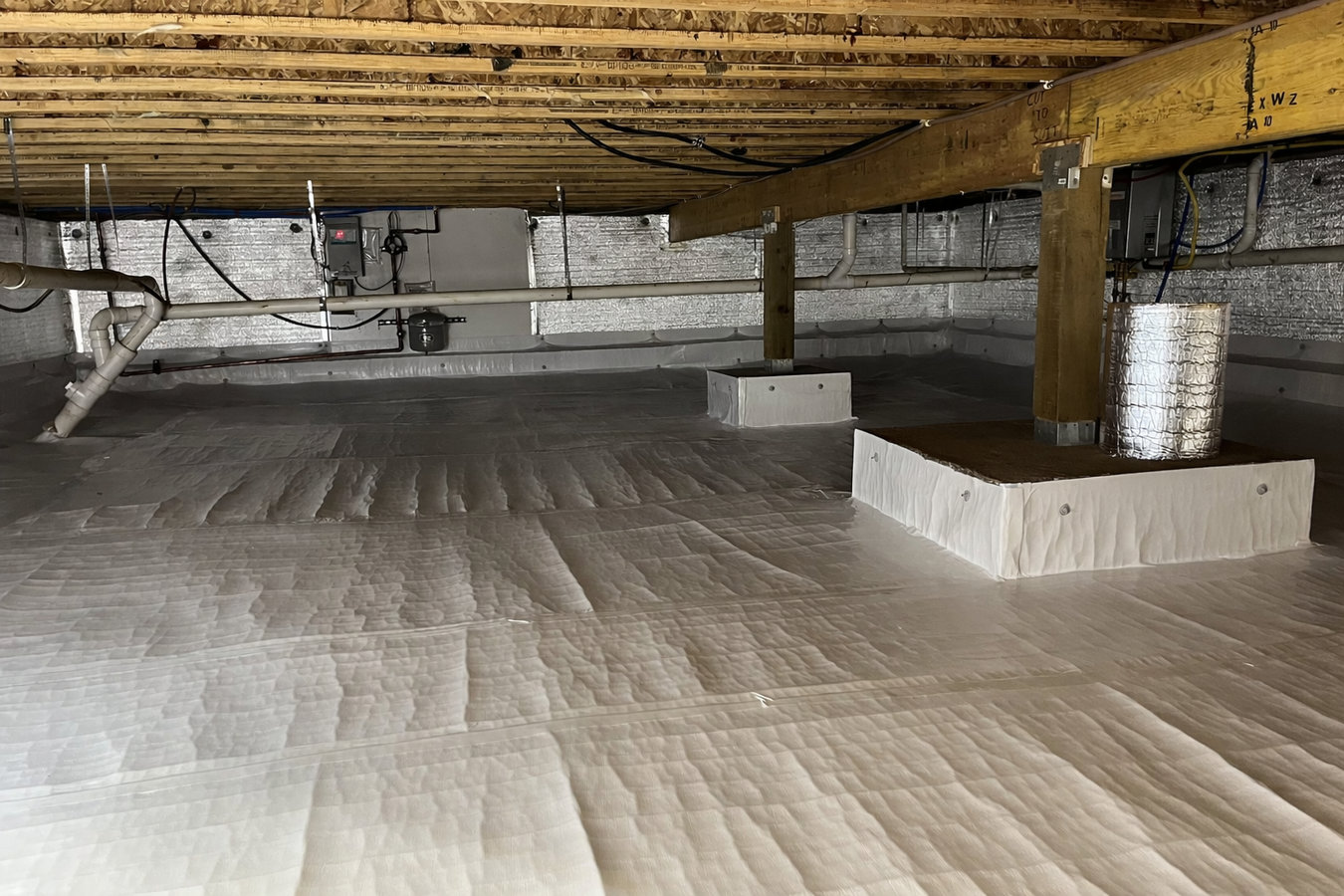
Monsoon moisture rises fast in San Luis crawl spaces. A properly installed vapor barrier stops it at the source - protecting your floors, framing, and comfort.
Crawl space vapor barrier installation in San Luis lays a thick plastic sheet across your crawl space floor to stop ground moisture from rising into your floors and framing - most jobs on an average-sized home are completed in one day with no disruption to your routine and no need to leave the house.
San Luis sits in the Sonoran Desert, but the ground under many homes here is wetter than it looks. The summer monsoon season - typically July through September - drops intense rain that saturates the soil fast. On top of that, the Yuma Valley surrounding San Luis is one of the most intensively irrigated agricultural regions in the country, and year-round irrigation keeps ambient soil moisture higher than you would expect from a desert climate. Homes near farmland and irrigation canals are especially affected. Without a barrier in place, that moisture rises straight up into your crawl space, where it can rot floor joists, breed mold, and make your home harder to cool.
For homes with both a crawl space and additional below-floor concerns, combining a vapor barrier with crawl space insulation addresses moisture and heat transfer at the same time. If your home is on a concrete slab rather than a raised foundation, the vapor barrier installation page covers the options that apply to slab-on-grade construction.
If you notice a damp, earthy odor inside your home during or after San Luis monsoon storms, that smell is almost always coming from moisture rising through an unprotected crawl space. The smell may be strongest near the floor or in rooms directly above the crawl space. This is one of the clearest early warning signs that moisture is getting in.
Walk slowly across your floors and pay attention to any spots that flex or feel slightly spongy when you step on them. This can mean the wooden supports beneath your floor are absorbing moisture and beginning to weaken. In San Luis homes near irrigated farmland, this kind of damage can develop faster than homeowners expect because the ground stays wetter than it looks.
San Luis summers are brutal, and your air conditioner works hard enough as it is. If your cooling bills seem higher than they used to be, a damp crawl space could be part of the reason. Moisture in the crawl space makes the air your AC has to cool feel heavier and harder to manage, which forces the system to run longer.
If you bought your home and have no documentation that a vapor barrier was ever installed or replaced, assume it needs attention. Many homes in San Luis - particularly manufactured homes on older lots - were never properly sealed underneath. A quick visual inspection can confirm whether you are protected or not.
The right vapor barrier for your home depends on how your crawl space is used, how easy it is to access, and what moisture conditions you are dealing with. Standard installations use 6-mil to 10-mil polyethylene sheeting laid flat across the crawl space floor, with seams overlapped by at least 12 inches and taped securely. For homeowners who occasionally need to enter the crawl space for plumbing or HVAC maintenance, we recommend heavier 20-mil material that holds up to foot traffic and lasts 20 years or more. All installations include seam taping and edge fastening against the foundation walls - the two details that separate a job done right from one that fails within a few years.
For homes with persistent moisture problems or poor crawl space ventilation, full encapsulation extends the barrier up the foundation walls and seals around all penetrations - pipes, posts, and HVAC ducts. This approach is the most complete solution and pairs well with crawl space insulation to address both moisture and heat transfer in a single visit. If you are also concerned about moisture protection for a concrete slab or other foundation areas, our vapor barrier installation service covers those applications as well.
6-mil to 10-mil plastic sheeting laid across the crawl space floor - the most common installation and the right choice for most San Luis homes on raised foundations.
Thicker material for crawl spaces that are accessed regularly for plumbing or HVAC maintenance, or for homes with a history of moisture problems - lasts 20-plus years with proper installation.
Barrier extends up the foundation walls and is sealed at all penetrations - the most complete solution for homes with persistent moisture issues or low crawl space ventilation.
Combines vapor barrier with crawl space insulation in a single visit - suits homes where both moisture and heat transfer through the floor are causing comfort problems.
San Luis gets hit with two moisture challenges that most desert cities do not. First, the summer monsoon season brings intense, short-duration storms that saturate the soil around your foundation fast - faster than drainage can handle. Second, the soil in this part of Yuma County contains significant amounts of caliche, a hard calcium-rich layer that sits close to the surface and does not drain well. When rain falls on caliche-heavy lots, water pools on top of it and pushes sideways toward your foundation rather than soaking deep into the ground. A crawl space without a barrier absorbs all of that moisture directly. Homeowners in Somerton and throughout the agricultural communities surrounding San Luis face the same conditions.
A significant portion of San Luis housing includes older manufactured and modular homes on pier-and-beam foundations that were built before moisture management standards became common practice in the region. Many were constructed with minimal or no ground moisture protection, and whatever was originally installed has had decades to degrade. Homes in Yuma and the surrounding communities face similar challenges with aging housing stock. If your home was built before the mid-2000s or is a manufactured home and you have no record of vapor barrier work, there is a good chance the original protection - if any - is no longer doing its job. The only way to know for sure is a visual inspection, which costs nothing and takes less than an hour.
We ask basic questions about your home - size, foundation type, whether you have noticed any odors or soft spots. This helps us arrive prepared with the right materials. We reply within one business day and can usually schedule a visit within a few days.
A technician accesses your crawl space - through a floor hatch or exterior vent - and checks the size of the space, any existing barrier material, visible mold or water, and how easy the space is to work in. This visit is free and takes 30 to 60 minutes. A written estimate follows before any work is agreed to.
The crew removes any old damaged material and debris, rolls out new plastic sheeting, overlaps and tapes every seam, and secures the edges against the foundation walls. Most homes are finished in one day. You can be home - there is no need to leave.
When the job is done, we walk you through what was completed - either with photos taken inside the crawl space or by walking you to the access point so you can see the finished work yourself. We clean up the area and leave you with documentation of the completed installation.
Free on-site visit, written estimate, no obligation. We reply within one business day.
(928) 296-5342Every job starts with a free written estimate that spells out the material, prep work, and price before we begin. We walk you through the finished installation and document what we sealed, so you have a clear record if a question ever comes up.
San Luis has grown to more than 35,000 people, and we have worked on homes throughout the city - from neighborhoods near the Port of Entry to newer subdivisions on the north side of town. Local presence means we understand how caliche soil, irrigated farmland, and monsoon season affect homes here specifically.
We recommend material thickness based on what your crawl space actually needs - not what is cheapest or easiest to install. A crawl space that needs regular access for plumbing or HVAC gets heavier material than one that stays sealed. We explain why before we install.
We document the crawl space with photos before and after installation so you have a record of exactly what was done - even if you never want to go in there yourself. That documentation is useful if you ever sell the home and want to show buyers the moisture protection is in place.
Every crawl space is different, and we treat it that way. We assess your space in person, recommend the right material and approach for your specific home, and document the finished work so you have a record that actually means something - not just a receipt.
For further guidance on installation standards and moisture control best practices, the U.S. Department of Energy and the EPA moisture and mold resources are reliable references.
General vapor barrier service covering slab-on-grade homes and other foundation types - read this if your home is on a concrete slab rather than a raised crawl space.
Learn morePairs naturally with a vapor barrier - insulating the crawl space floor or walls reduces heat transfer into your living area on top of blocking moisture.
Learn moreMonsoon season arrives fast - protect your floors and framing before the first big storm. Call or request a free estimate today.