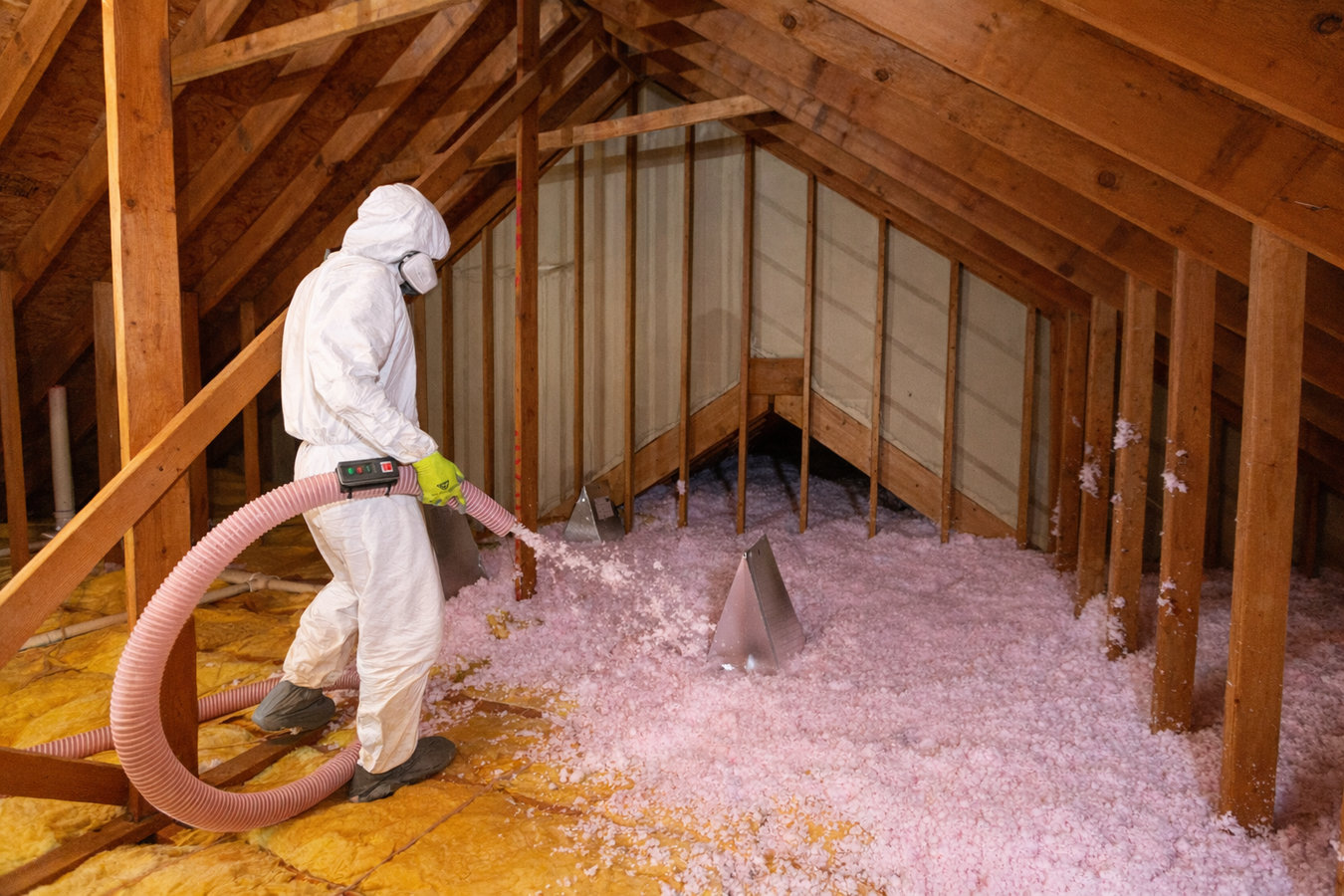
San Luis Insulation delivers blown-in insulation, attic insulation, and spray foam insulation to Brawley, CA homeowners - a team that works the Imperial Valley regularly and responds within 1 business day of your call.
Most Brawley homes were built between the 1940s and 1980s - a period when desert insulation standards were minimal. The services below are chosen for the stucco exteriors, aging attics, and clay-heavy soil conditions that define this Imperial County community.
In a city where most attics have been sitting with the original 1950s or 1960s insulation for decades, blown-in loose fill is the most practical way to restore proper depth without tearing into finished ceilings. It reaches corners and irregular spaces that batts leave exposed. Learn more about blown-in insulation and why it performs well in aging desert home attics like those across Brawley.
Brawley regularly sees summer highs above 110 degrees Fahrenheit, and an uninsulated or under-insulated attic turns that outdoor heat into a direct load on your home. Attic insulation is where most Brawley homeowners see the fastest return on investment, because the attic is where the most heat enters during the long Imperial Valley summer.
Older Brawley homes often have non-standard wall cavities or irregular framing from decades of additions and repairs. Spray foam expands to fill those irregular spaces completely, bonding to wood and stucco alike. It is particularly useful for sealing the transitions between original construction and later additions where air leakage tends to be worst.
Brawley spring dust storms push fine silt and sand into homes through any gap in the building shell - around light fixtures, pipe penetrations, and where the attic floor meets the walls. Air sealing those gaps before adding insulation is what keeps both the heat and the dust out, and it is always done before insulation in our process.
A large share of Brawley homes from the 1940s through 1970s were built with no wall insulation at all. Retrofit insulation installs into the existing wall cavity through small openings, adding a thermal layer without requiring full demolition of drywall or stucco - a practical solution for homes that are otherwise in good shape.
The clay-heavy soil under Brawley swells when wet and shrinks as it dries, and the below-sea-level elevation means moisture drainage around homes is slower than you might expect. A vapor barrier under a crawl space or slab edge stops ground moisture from migrating upward into wall bases and floor assemblies, where it degrades insulation and encourages mold.
Brawley sits about 112 feet below sea level in the Imperial Valley, one of the hottest places in the United States. Summer temperatures regularly exceed 110 degrees Fahrenheit, and that heat persists from June through September with little relief. Most homes in the city were built between the 1940s and 1980s, during a period when insulation requirements for desert climates were far below what California now recommends. The practical result: a large share of Brawley homes are running air conditioners against attics that were never designed to hold up to today energy standards, pushing electric bills to levels that make every summer expensive.
The Imperial Valley also has clay-heavy soil that expands and contracts as moisture levels change. That soil movement cracks concrete slabs, shifts foundations slightly, and opens gaps in the building shell that let hot air and fine dust in. Spring dust storms make this worse, pushing particulate matter through gaps around windows, vents, and electrical boxes. A contractor familiar with Brawley knows to treat air sealing and insulation as a single project, not two separate jobs, because the dust and the heat enter through the same gaps.
Brawley is one of the hottest cities in the US during summer, and the heat runs for months. Homes with thin or aging attic insulation load heat faster than any AC can remove it, driving electric bills well past what most families want to spend.
Most Brawley homes were built 40 to 80 years ago. Insulation from that era has often compressed, shifted, or been disturbed by repairs and additions over the decades. What looked like adequate coverage when the home was new is rarely performing at that level today.
The Imperial Valley clay soil swells and shrinks with moisture changes, and Brawley water table conditions at below-sea-level elevation slow drainage around homes. That combination can push ground moisture upward into crawl spaces and wall bases, degrading insulation from the bottom up.
We work throughout the Imperial Valley, and Brawley is the commercial hub of the northern end of the county - which means jobs in Brawley often require navigating both the tight older neighborhoods downtown near the Barbara Worth Hotel and the newer subdivisions on the edges of town with tile roofs and block wall fencing. Those two types of homes call for different approaches, and we come equipped for both. The older central-city homes often have attics that have not been opened since they were built, with original blown or batt insulation that has settled into a thin layer of gray material that barely registers on a depth gauge. The newer outer-ring homes are more likely to have some insulation already but still fall short of what Imperial Valley summers demand.
Highway 86 and Highway 111 are the main routes through Brawley and out to the rest of the county, and we know these roads well from regular work in the area. We also serve the communities north and south of Brawley along the valley floor. Calipatria, CA is about 20 miles north of Brawley along Highway 111, and we cover that area as well. The Imperial Valley is one of the most productive agricultural regions in the country, and the communities here share the same climate challenges - extreme summer heat, spring dust storms, and soil conditions that keep contractors on their toes. We understand all of that before we arrive at your door.
Call us or submit the contact form and we will get back to you within 1 business day. We will ask a few basic questions - your home type, when it was built, and what problem you are trying to solve - so we can show up to the assessment already knowing what to look for. No lengthy sales process; we just want to understand your home.
We inspect the attic, walls, and any problem areas you have identified. For older Brawley homes, that means checking the actual depth and condition of existing insulation, not just assuming it is adequate because the house looks fine from outside. You will receive a written estimate with no obligation - and we address cost honestly at this stage, not after the work is done.
On installation day, we seal gaps around penetrations before any insulation goes in. This is not optional - in a dusty, hot desert community like Brawley, skipping air sealing and just adding blown-in material on top leaves hot air and fine dust a direct path through your ceiling. Most single-family jobs in Brawley are done in one day.
Before we leave, we walk you through the completed work and answer any questions. We will show you what was done and what to expect in the coming weeks - typically a noticeable improvement in how evenly your home cools and a drop in your electric bill within the first full billing cycle. If anything concerns you afterward, call us.
We serve Brawley, CA and the surrounding Imperial Valley. Call or submit the form and we respond within 1 business day - no pressure, just a straight answer about what your home needs.
(928) 296-5342Brawley is a city of about 27,000 people in Imperial County, sitting roughly 112 feet below sea level in the heart of the Imperial Valley. It is the commercial and services hub for the northern part of the county, and residents from nearby communities like Westmorland and Calipatria regularly come to Brawley for shopping and services. The local economy is rooted in agriculture - the Imperial Valley produces lettuce, alfalfa, sugar beets, and cattle, and many Brawley families have worked in farming or related industries for generations. The city has a strong, close-knit character, and the annual Brawley Cattle Call Rodeo each November is one of the largest rodeos in California.
Most of Brawley residential areas are made up of single-family stucco homes on modest lots, with the oldest and most established neighborhoods clustered around downtown near the historic Barbara Worth Hotel. Newer subdivisions on the city edges have tile roofs and block walls more typical of 1990s and 2000s California desert construction. Brawley sits along Highway 86 and Highway 111, and the valley is a short drive from the Salton Sea to the north. Nearby, Calipatria, CA is about 20 miles north along the highway, and we serve both communities as part of our regular Imperial Valley work.
High-performance spray foam that seals and insulates in one application.
Learn moreProfessional vapor barrier installation to protect your structure.
Learn moreSan Luis Insulation serves Brawley and the Imperial Valley. Call or submit the form and we will respond within 1 business day with a free, no-obligation estimate.