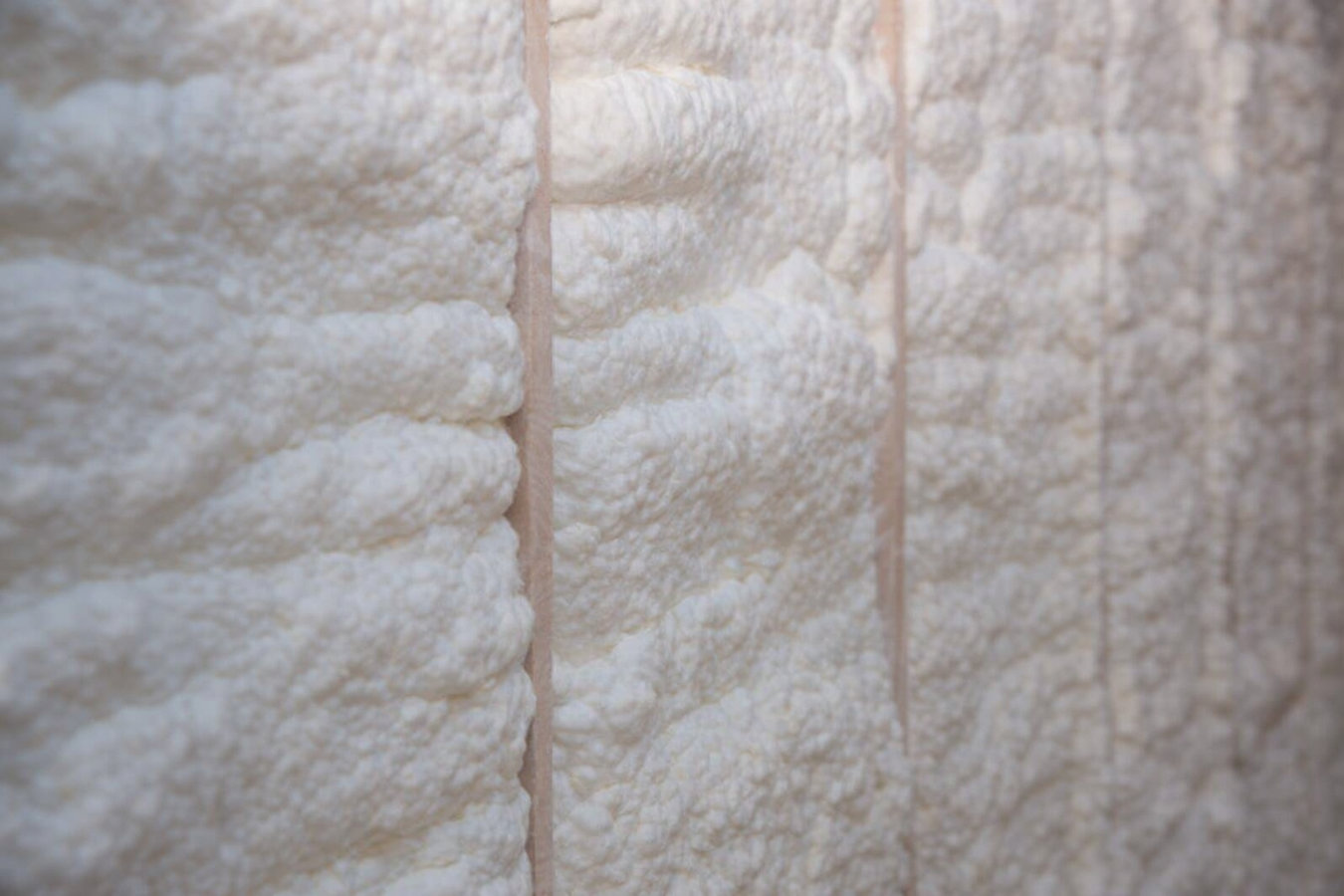
Your AC should not run all day just to keep up. Open-cell foam seals every gap in your home so cooled air stays in and desert heat stays out - all summer long.
Open-cell foam insulation in San Luis is sprayed as a liquid that expands up to 100 times its original volume, filling every gap and crack in your attic, walls, or crawl space before hardening - most residential attic jobs are completed in a single day, with a two-to-four-hour re-entry window after spraying is finished.
In San Luis, where summer temperatures regularly exceed 110 degrees and the cooling season stretches from late spring through early fall, the air-sealing quality of open-cell foam is its biggest asset. Fiberglass batts insulate but they do not seal - every gap between batts, every space around a penetration, and every compressed section is a path for outside heat to reach your living space. Foam fills those paths completely. Homes that have had foam installed in the attic typically hold their temperature better through the hottest part of the afternoon, which is when San Luis heat is most intense.
Open-cell foam also allows a small amount of moisture vapor to pass through it, which is generally an advantage in the Sonoran Desert climate - it does not trap moisture inside wall cavities the way a fully sealed barrier might, an important consideration during monsoon season. For applications where moisture resistance is a priority, such as below-grade or exterior wall work, pairing this service with commercial insulation options or discussing closed-cell foam insulation with your contractor is worth the conversation.
If your air conditioner runs almost constantly during San Luis summers but rooms still feel stuffy or warm, heat is getting in faster than your system can remove it. A well-insulated home should be able to reach the set temperature and hold it without nonstop AC cycling. When it cannot, the most common cause is an attic or wall cavity letting outside heat pour in unchecked.
San Luis sits in a region prone to dust storms and persistent desert wind. If fine dust keeps reappearing on furniture and floors within a day or two of cleaning, air is moving through your home's envelope more freely than it should be. That same air movement carries your expensive cooled air out at the same time. Foam seals those pathways and reduces both dust infiltration and energy waste.
Some increase in cooling costs is normal in summer, but if your electric bill jumps dramatically between spring and peak summer months, your home is working far harder than a well-sealed house should. Yuma Electric Cooperative and Arizona Public Service both serve the San Luis area and can pull your usage history - a dramatic seasonal spike is one of the clearest signals that insulation is not doing its job.
Hold your hand near an interior wall outlet or light switch plate on a hot afternoon. If you feel warm air moving through it, your wall cavities connect to the outside and hot air is finding its way in. This is especially common in older homes and manufactured housing, both of which are common in San Luis, and it is exactly the kind of infiltration that spray foam is designed to stop.
We apply open-cell foam in attics, interior wall cavities, around penetrations, and in manufactured homes throughout San Luis and the surrounding Yuma County area. The attic is typically the highest-impact area - applied to the underside of the roof deck, foam stops solar heat before it ever reaches your ceiling. Most San Luis homeowners notice the difference in how their home holds temperature within the first few days after installation.
For older homes and manufactured housing - both common in San Luis - targeted air gap sealing around rim joists, electrical penetrations, and wall-to-ceiling joints can meaningfully reduce infiltration without requiring a full attic treatment. Every job starts with a walkthrough assessment so we can recommend where foam will have the greatest impact for your specific home. If you are also dealing with excess moisture or need work in a below-grade space, we can discuss whether closed-cell foam insulation is a better fit for those specific areas, or whether commercial insulation options apply to your property.
Applied to the underside of the roof deck or attic floor - the highest-impact area in San Luis heat, where sealing stops solar heat from radiating directly into living spaces.
Fills wall cavities completely during open-wall renovations, eliminating the gaps and thin spots that batt insulation frequently leaves behind.
Targeted foam around rim joists, electrical penetrations, and wall-to-ceiling joints - often the fastest way to reduce air infiltration in an existing home.
Tailored for manufactured and mobile homes, which were typically built with thinner walls and less insulation - a common situation in the San Luis housing stock.
San Luis sits in the Sonoran Desert along the U.S.-Mexico border, where summer highs routinely push past 110 degrees and attic temperatures can climb well above 150 degrees on a hot afternoon. A large portion of the local housing stock consists of modest single-family homes and manufactured housing built to entry-level construction standards, many of which were insulated with thin fiberglass batts that have compressed or shifted over time. If your home was built before 2010 and has never had an insulation upgrade, there is a good chance it is losing a meaningful amount of cool air every single day. Beyond heat, the annual monsoon season from July through September brings sudden spikes in humidity - open-cell foam handles this transition well in most San Luis homes because it does not trap moisture vapor inside wall cavities the way a fully sealed system might. The Spray Polyurethane Foam Alliance notes that properly installed foam is designed to last the lifetime of the building without settling or compressing - a meaningful advantage over batt insulation in a climate that puts constant thermal stress on your home.
Dust storms are another year-round concern in this part of Yuma County. Fine particulate matter driven by desert wind finds every unsealed gap in your home's envelope, coating surfaces and clogging HVAC filters. Sealing those gaps with foam reduces how much dust gets in, which matters especially in a community where outdoor air quality can shift dramatically within hours of a storm rolling through. We serve homeowners throughout San Luis and in neighboring communities including Somerton and Yuma, so if you are in the broader area and dealing with the same desert heat and dust challenges, we can help.
We ask a few basic questions - home type, which areas you want insulated, and whether any work has been done before. We respond within 1 business day and can usually schedule a site visit within a few days.
A team member walks through your attic, crawl space, or wall areas, notes existing insulation, checks for moisture or damage, and takes measurements. You receive a written estimate breaking down area, thickness, and total cost.
Before the crew arrives, clear the work area and arrange for your household and pets to be out during the spray and for the re-entry window after - typically two to four hours. Your contractor gives you a specific time before work begins.
The crew protects adjacent surfaces, applies foam in controlled passes, and trims any excess once cured. Before leaving, they walk you through the finished work so you can see the coverage and confirm there are no thin spots or gaps.
Free estimate. Written scope. No pressure to sign on the spot. We respond within 1 business day.
(928) 296-5342Every foam job starts with a free written estimate that spells out coverage, thickness, and price before we spray. In a smaller market like San Luis, a clear written scope is real protection - you know exactly what you are paying for before work begins.
San Luis has grown to a community of more than 35,000 people, and we work on homes across the city and into the broader Yuma County area. Local presence means faster scheduling and a crew that understands desert construction and the local housing stock firsthand.
San Luis temperatures exceed 110 degrees for weeks at a time - an attic application that works in Phoenix may still be underpowered here. We recommend foam thickness based on your specific home and heat exposure, not a one-size standard.
You receive a written estimate covering exactly what gets done, which areas are treated, what thickness is applied, and the total cost. No surprises on installation day, and no pressure to sign before you are ready.
We encourage every homeowner to get a free written estimate before signing anything. Local knowledge, a documented scope, and a clear price before work starts are the foundation of every job we do in San Luis.
Spray foam and blown-in insulation options for San Luis commercial buildings, warehouses, and retail spaces that need to stay cool during the long desert cooling season.
Learn moreHigher-density foam with built-in moisture resistance - a better fit for below-grade spaces and exterior walls where vapor control is as important as heat resistance.
Learn moreSummer is long and hard on homes in this part of Arizona - the sooner your home is sealed, the sooner you stop paying to cool a leaky house.