If your home never fully cools down despite running the AC, heat rising through an uninsulated crawl space is often the reason. We fix that problem at the source.
Crawl space insulation in San Luis blocks heat from rising through your floor into your living areas, reducing how hard your air conditioner has to work - most jobs for an average home take one to two days from start to finish. The ground under your home and the air in an uninsulated crawl space can get intensely hot during San Luis summers, and that heat pushes upward constantly while your AC fights to keep up. If you are also dealing with a failing attic, pairing crawl space work with wall insulation gives your home the most complete thermal protection available.
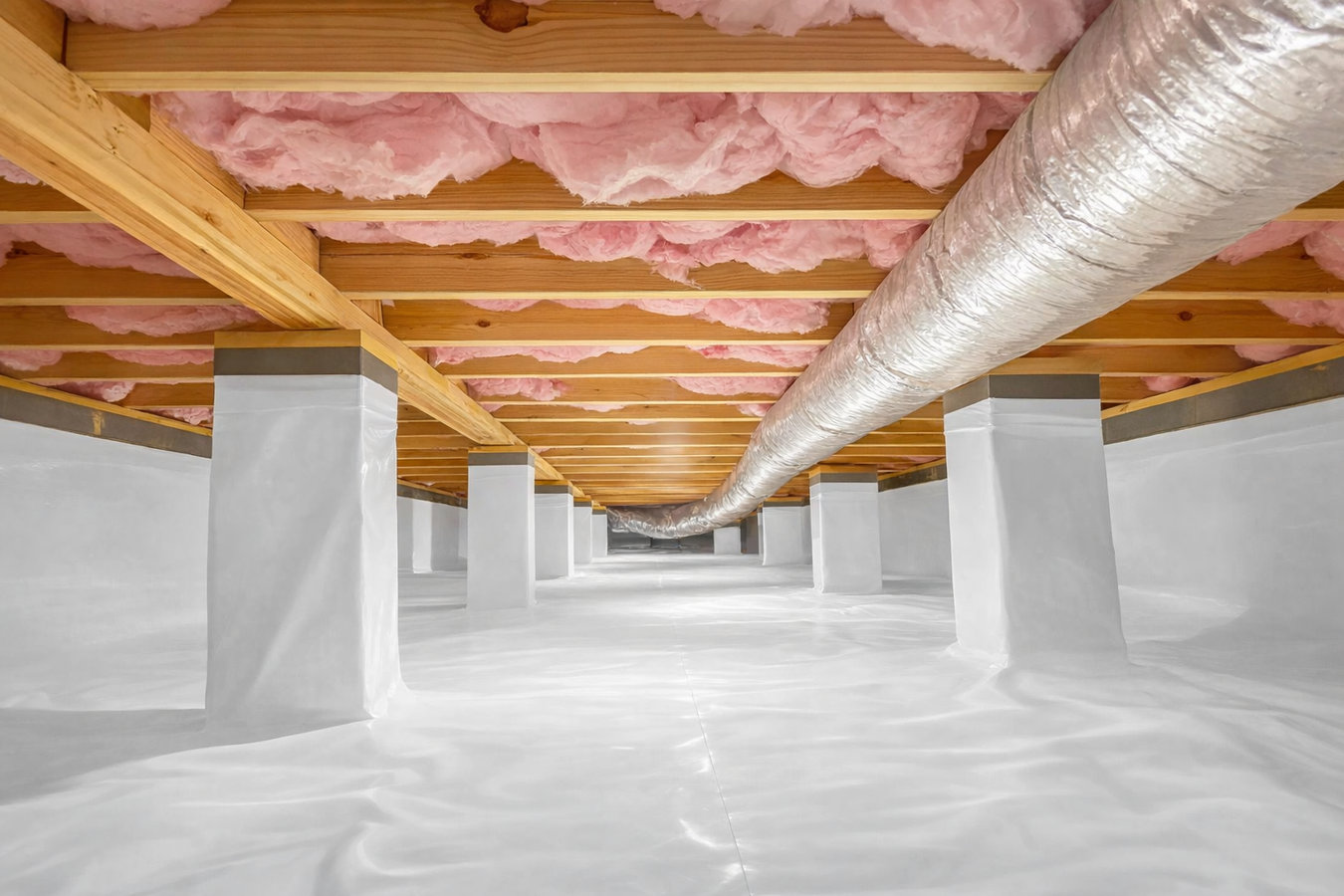
There are two main approaches: insulating the floor above the crawl space (the underside of your subfloor) or sealing and insulating the crawl space walls and floor itself - a method called encapsulation. Encapsulation is increasingly common in the Yuma region because it also controls monsoon moisture and prevents conditioned air from being wasted in an unsealed space. Either approach works better with a crawl space vapor barrier in place, which is why we often recommend handling both in the same visit.
If your air conditioner runs almost constantly during San Luis summers but certain rooms - especially those over the crawl space - still feel warm or stuffy, heat is likely entering from below. This is one of the most common signs that the crawl space is uninsulated or that existing insulation has failed.
San Luis homeowners often see electric bills climb sharply from May through September. If your cooling costs feel disproportionately high compared to neighbors with similar-sized homes, poor crawl space insulation is a likely contributor - heat entering from below makes your system work much harder than it should.
If your home develops a damp or musty odor in the weeks following heavy monsoon storms, moisture may be accumulating in your crawl space and working its way into your living areas. This is a sign that your crawl space lacks an adequate vapor barrier and may need both moisture control and fresh insulation.
If a pest control visit confirmed rodent activity under your home, there is a strong chance your existing insulation has been disturbed or contaminated. Rodents nest inside batt insulation and can destroy large sections quickly. After any pest remediation, the crawl space insulation should be inspected and likely replaced.
We install crawl space insulation for homes of all sizes across San Luis, including older construction, newer subdivisions, and manufactured homes with non-standard configurations. For floor insulation, we fit batt material between the floor joists above the crawl space - the most common approach for homes with accessible, open crawl spaces. A well-done job leaves no gaps, sags, or uncovered areas, because insulation that falls away from the floor above it loses most of its effectiveness quickly. Before any new material goes in, we check for existing pest damage, moisture problems, or old insulation that needs to come out first.
For homes where encapsulation makes more sense, we line the crawl space walls and floor with insulation and a sealed crawl space vapor barrier - this approach is especially effective in San Luis where monsoon humidity spikes every summer and can enter even a well-built crawl space through the ground. We also pair crawl space work with wall insulation when homeowners want to address their whole home envelope at once. Every job ends with a final walkthrough - either in person or through photos if the crawl space is not easily accessible to you.
Best for homes with accessible crawl spaces where insulating the subfloor is the most direct path to reducing heat transfer.
Best for homes where controlling both heat and seasonal moisture is the priority - common in San Luis given monsoon humidity.
Best for homes with bare ground in the crawl space, particularly ahead of monsoon season when ground moisture spikes.
Best for homes where rodent activity or moisture damage has compromised the existing insulation before new material can go in.
San Luis sits in the Sonoran Desert along the U.S.-Mexico border and regularly records summer highs above 110 degrees - among the hottest conditions of any city in the United States. The ground under your home and the air in an uninsulated crawl space become intensely hot during the long summer season, pushing heat upward into your living areas constantly. San Luis is also surrounded by the heavily irrigated Yuma Valley, and the proximity to farmland means higher-than-average pest pressure - rodents and insects actively seek shelter in residential crawl spaces. Homeowners across San Luis we serve regularly, including those near Somerton and Wellton , face the same combination of extreme heat and agricultural pest pressure that makes crawl space insulation critical in this region.
The North American Monsoon from July through September adds another layer of complexity. Monsoon storms bring sudden, intense rainfall that dramatically raises outdoor humidity levels. Without a vapor barrier and proper insulation, that seasonal moisture enters crawl spaces and can cause mold growth, soft flooring, and degraded insulation - even in an otherwise dry desert climate. A significant portion of San Luis housing includes manufactured homes and older construction built before the mid-1990s, which often have original insulation - or none at all - that has never been properly addressed. We know how to work in these non-standard crawl space configurations, which not every contractor from outside the area does.
We ask a few basic questions - home size, whether you have had pest or moisture issues, and what you know about the existing insulation. This helps us come prepared with the right equipment. We respond within 1 business day, and you are not asked to commit to anything at this stage.
A contractor physically enters your crawl space to assess the existing insulation condition, check for signs of moisture or pests, and measure the space. This inspection typically takes 30 to 60 minutes. If a contractor quotes you without looking under your home, that is a red flag. You receive a written estimate after the visit.
If old insulation needs to come out, pests need to be addressed, or a vapor barrier needs to go down before new insulation is installed, that work happens first - sometimes on a separate day. We communicate clearly about the schedule so you always know what phase is next.
The crew installs the new insulation entirely in the crawl space with minimal disruption inside your home. Most jobs are completed in a single day. Afterward, we walk you through what was done - in person or via photos if the crawl space is not easily accessible - and provide any warranty documentation in writing.
We respond within 1 business day - no obligation, no pressure. After you submit, someone from our office calls to schedule a free on-site estimate so we can physically inspect your crawl space before quoting you a price.
(928) 296-5342We never give a firm price without physically entering your crawl space first. The size, condition, and configuration of the space all affect the job scope. You will know exactly what is included and why before a crew starts work.
A significant share of San Luis housing includes manufactured homes with crawl space configurations that differ from site-built construction. We have worked in these spaces and know what to look for - so you get a job tailored to your actual home, not a one-size-fits-all approach.
Every crawl space job starts with a free written estimate that spells out the scope, materials, and price. You know what you are paying for before we start, and we document the work when we finish - not just a phone number that goes unanswered.
We know the pest pressures near the agricultural fields, how monsoon season affects crawl spaces here, and what insulation in older San Luis homes looks like after years of desert heat. That local context shapes how we approach every job in this area.
Crawl space insulation is one of the most direct ways to reduce cooling costs in a desert climate, and done right it lasts 20 to 30 years with periodic inspections. Call us or request a free estimate and we will come out and give you a straight assessment. The U.S. Department of Energy provides guidance on R-value recommendations for crawl spaces in hot-dry climate zones like San Luis.
Addressing your walls alongside the crawl space gives your home a complete thermal barrier that fights heat from every direction during a San Luis summer.
Learn moreA vapor barrier installed before or alongside crawl space insulation stops ground moisture from rising into your home during monsoon season and year-round.
Learn moreSan Luis summers do not wait - get your home protected before the heat peaks and your electric bills climb again.